Clive Tatenda Makumbe in Zimbabwe
The continuous development of these wetlands contributes to water and sanitation problems, including frequent shortages and dysfunctional sewer drainage systems, which compound the daily hardships for many residents.
Wetlands play a crucial role in maintaining biodiversity and regulating water flow. However, unchecked construction on these fragile areas disrupts ecosystems and exacerbates flooding. These challenges have raised concerns about the competency of local town planners, engineers, and the role of so-called land barons who allocate residential stands without proper due diligence.
Among the most affected areas is Tinshel, a suburb established in 2014. From its inception, Tinshel has grappled with severe seasonal flooding, due in large part to poor drainage systems. More than 70 households sit precariously along a shallow, narrow two-kilometre-long stream—a mere three metres away in some cases. Heavy rainfall often causes the stream to overflow, forcing residents to flee their homes to avoid contaminated water, the risk of waterborne diseases such as cholera and typhoid, and extensive damage to property.
“We have endured severe flooding due to substandard drainage infrastructure,” said Alford Makanga, one of Tinshel’s residents who has lost both personal belongings and building materials to the floods.“The water undermines our foundations, causing cracks in the walls of our houses. Every rainy season, we worry about the spread of diseases and the long-term safety of our homes. This situation highlights the incompetence of our local authority and the land developers who sold us these stands.”
Another resident, Eunifer Chiremba, recounted how the flooding made it nearly impossible for her family to maintain any semblance of normal life.
“Water from the stream was flowing into our yards, destroying our property and collapsing perimeter walls,” she said.
“At one point, we had to seek shelter at a nearby school because our home was inhabitable. Thankfully, Tinshel Properties and Sheasham are now working together to address the drainage issues. We’re hopeful the situation will improve.”
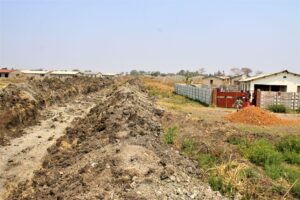
According to Tinshel Properties Projects Manager, Manuel Chidaushe, part of the flooding is a natural result of heavy rainfall and the shallow stream’s inability to accommodate excess water. After consultations with the Zimbabwe Christian Alliance (ZCA) Gweru Peace Committee, Tinshel Properties took measures to deepen the waterway.
“We realized that deepening the stream was essential to channel more water away from residential areas,” Chidaushe explained.
“We received input from ZCA, the District Administrator’s office, and local authorities on how to solve the issue without displacing people. We still need to ensure children’s safety, so we plan to conduct awareness campaigns and construct footbridges at strategic points.”
The ZCA Gweru Peace Committee, represented by Coordinator Pastor Makore, has been mediating the growing conflict between exasperated residents and the land developers.
“Tensions were running high. People were furious over the flooding and feared losing their investments,” he said.
“Our role was to create dialogue and push for a solution that doesn’t involve demolishing homes. We concluded that improving the area’s drainage was the best way forward. Now that the stream is being deepened, we hope Tinshel will finally become a safe place to live.”
Several local officials, including Gweru Mayor Josiah Makombe, Councillor Notal Dzika, and Gweru District Development Coordinator Tarisai Mudadigwa, recently toured Tinshel to assess the gravity of the situation. Their visit follows an earlier statement by President Emmerson Mnangagwa, who castigated land barons and urban councils for allocating stands on wetlands. A national task force, led by Vice-President Constantino Chiwenga, has been established to restore order to urban settlements.
Meanwhile, National Housing Minister Daniel Garwe announced a national audit of all residential allocations in towns and cities to identify areas at risk of flooding and determine which houses might need relocation.
As Tinshel’s community continues working to mitigate flooding, residents remain hopeful that the deepening of the stream and other safety measures will safeguard their homes and health. They also urge tighter oversight and long-term planning to prevent further encroachment onto wetlands, ensuring a more sustainable future for all Gweru residents.